
Support for unfamiliar situations
BeforeThe person has to leave the work to find its instructions or help.
With SkillSmithOpen the selected resources with the task, and keep a question attached when help is needed.
Observed behavior and coaching
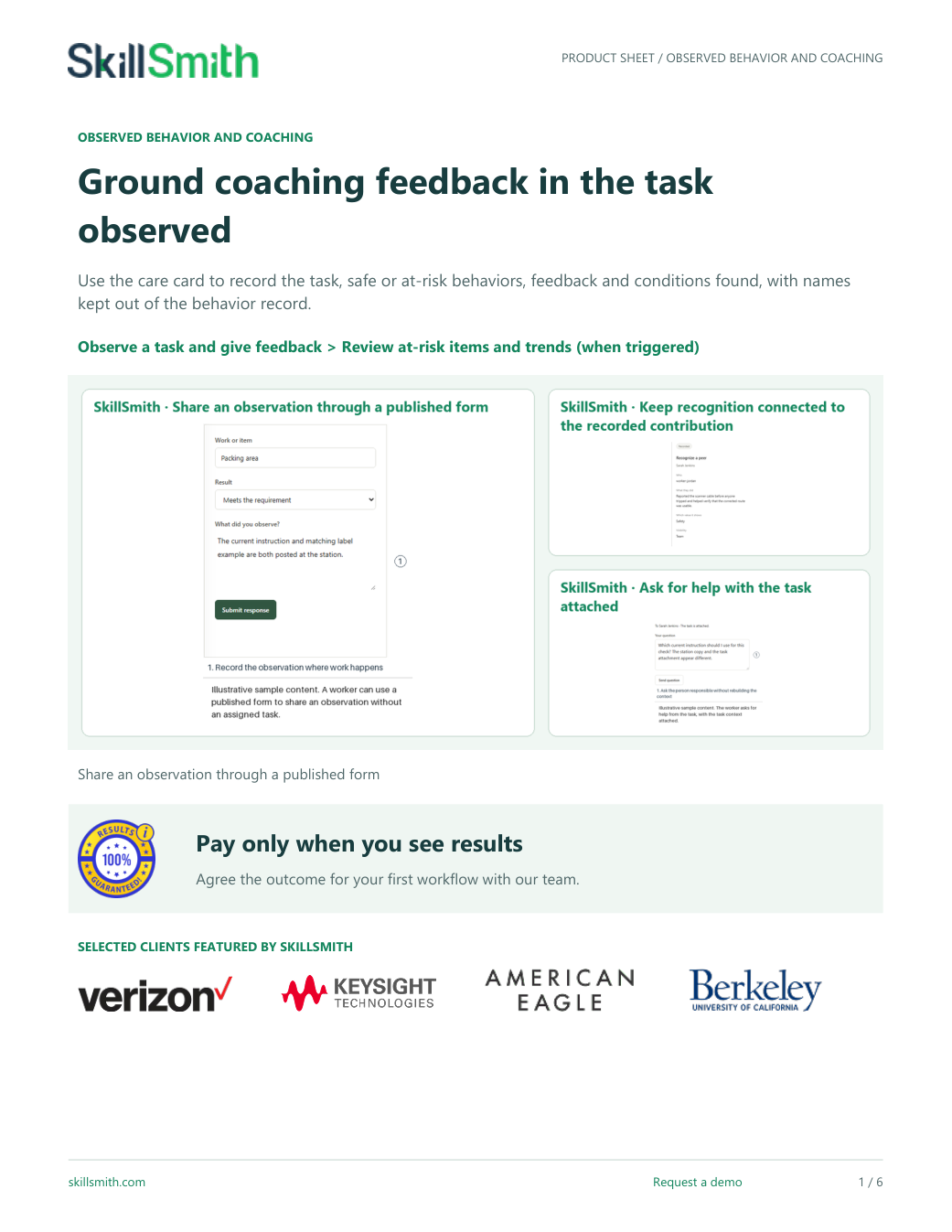
Use the care card to record the task, safe or at-risk behaviors, feedback and conditions found, with names kept out of the behavior record.
Observe a task and give feedback Review at-risk items and trends (when triggered)
Roles, playbooks and a practical launch plan for your team.
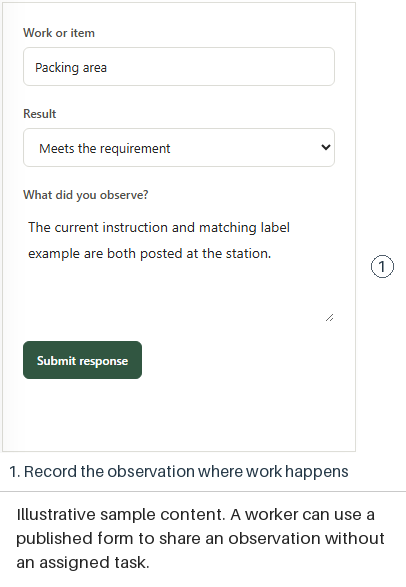
Share an observation through a published form

Agree the outcome for your first workflow with our team.
Trusted by leading organizations




“SkillSmith has always been very professional and responsive throughout the entire process and an absolute pleasure to work with.”
Paul HildebrandDirector of HSE/DOT, Jones Power
Observed behavior and coaching
The assigned team member works from care card. The record makes task observed and behaviours safe / at-risk (no names) clear to the next person.
WORKED DECISION
| Decision point | Information to use | Responsible next step |
|---|---|---|
| Working material | Care card | Open the selected material for this occurrence. |
| Recorded response | task observed, behaviours safe / at-risk (no names) and feedback given | Save the response with its work context. |
| Review point | feedback given and condition found | Agree the next action with the person responsible for this decision. |
Connected work across your team
Bring care card into the prepared work. Assigned team member and Team lead each receive the context needed for their part.
Assigned team member
Record task observed, behaviours safe / at-risk (no names), feedback given and condition found.
Team lead
When an at-risk behaviour or condition was flagged, record condition → HAZARD_CARE case, coaching focus and trend note.
BeforeThe person has to leave the work to find its instructions or help.
With SkillSmithOpen the selected resources with the task, and keep a question attached when help is needed.
BeforeThe current status hides which response or version came before it.
With SkillSmithKeep task observed, behaviours safe / at-risk (no names) and feedback given with the work, with recorded history available for later review.
Connected information and agent support
Keep the relevant material available at the point it is used. The resource choices below support different parts of the work.
Your work context
The observation card: behaviour list, safe / at-risk, feedback given.
Observer guide: how to observe, how to give no-blame feedback.
Recognition for observation rate, never for 'no at-risk found'.

We bring the relevant
context into your work
Keep the conversation moving
Use the product sheet to review the roles, materials, workflow and setup choices together.
PDF · 6 pages
Our delivery approach
Start with the materials and people you already have. We help make the setup choices explicit before your team uses the method.
Choose care card from the resources your team uses.
What we prepare togetherThe relevant resources are available for the tasks that use them.
Confirm assigned team member and team lead for this method, then choose the people eligible to receive its work.
What we prepare togetherThe method names who contributes, reviews and receives the next work.
Walk through these conditional steps: “Review at-risk items and trends”.
What we prepare togetherYour team sees the response and the resulting next step before extending the method.
Talk with our team
Bring us the work your team wants to improve. We’ll walk through your instructions, responsibilities and review criteria, then show how our platform can support that work.
We work with your team to organize the source material, responsibilities and review choices. Start with one useful example, then carry the agreed method into everyday work.
Your materialUse the instructions, forms and references your team already maintains.
Practical preparationConnect the material to the people and responses needed for the method.
A useful walkthroughTry the ordinary route and the point where your team needs a different decision.

VP of Strategic Partnerships
Connecting your workflows with the systems and partners you rely on.

Director of Customer Success
Helping your team turn procedures into practical learning and task completion.
Your questions
The response for this occurrence retains task observed, behaviours safe / at-risk (no names), feedback given and condition found. It belongs to the work being reviewed, rather than replacing a different occurrence's record.
Bring care card. We use those choices to prepare the working context, then check that each task opens the material it needs.
The conditional route is used when an at-risk behaviour or condition was flagged. Select the variant or respond to the recorded condition before treating that step as required.
Observation recorded with feedback given; flagged conditions are cases.